
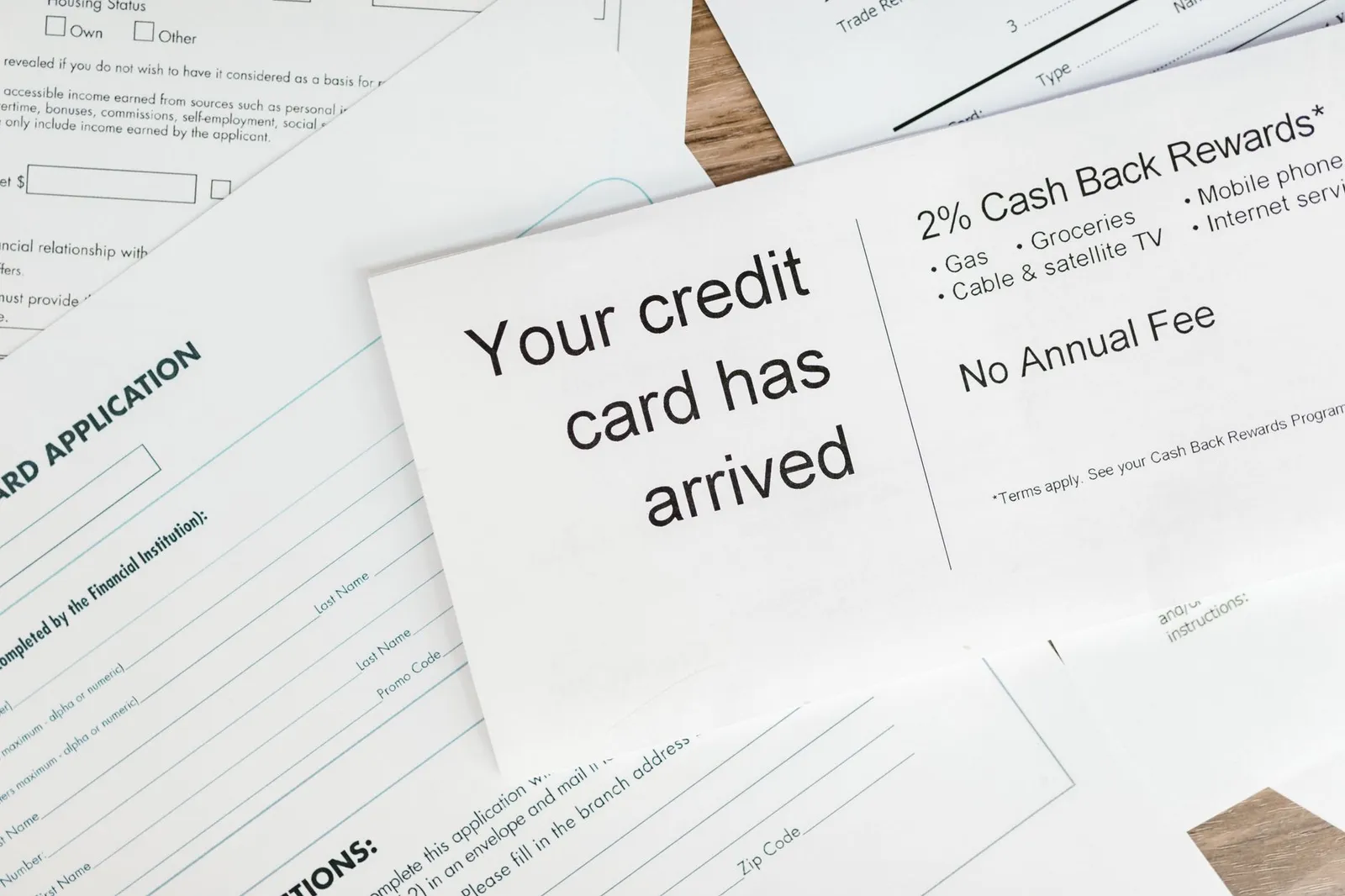
Credit Card Pre-Approval vs Pre-Qualification: What's the Difference?
You check your email and there it is: a credit card offer claiming you're "pre-approved" or "pre-qualified." The two words look almost identical, and honestly, for credit cards they often function that way. So what does each term actually promise? How do issuers check your credit behind the scenes? And where can you verify these offers yourself? Let's break it down.
Key takeaways
- Pre-qualification is consumer-initiated; pre-approval means the issuer already screened your file and came to you — but major issuers often use both terms interchangeably.
- Only the formal application triggers a hard inquiry. Checking offers through an issuer's pre-qualification tool never touches your credit score.
- A soft pull skips income, total debt load, and other underwriting details — so a pre-qualified result is an encouraging signal, not a guarantee.
- Mailed offers from issuers like Discover or Amex tend to reflect stronger eligibility signals than self-initiated checks on third-party comparison sites.
- Your credit profile can shift fast — a missed payment or new inquiry between screening and application can reverse a pre-approved offer.
What Pre-Qualification and Pre-Approval Actually Mean
Pre-qualification is something you kick off. You punch in your name, address, and the last four digits of your Social Security number on an issuer's site, and their system runs a soft check to gauge whether you'd likely get approved. TD Bank puts it simply: you feed in basic info, and you get an eligibility estimate back.
Pre-approval works the other way around. The issuer has already peeked at a snapshot of your credit file, decided you meet certain criteria, and reached out to you first — maybe a letter in your mailbox, maybe a notice sitting in your online account dashboard. PayPal frames it well: a firm offer sent your way versus an estimate you went and requested.
Neither term guarantees you'll get the final nod. Both just mean an initial screen suggests you clear the baseline bar for that particular card. Discover points out that unlike mortgage or auto loan pre-approvals, which dig into deeper underwriting, the credit card version is a much lighter first pass.
Why the labels blur together
Capital One and Citi both say it plainly: for credit cards, unlike mortgages or auto loans, issuers often toss around "pre-qualified" and "pre-approved" as if they mean the same thing. So the label on your offer tells you less than you'd think — the fine print carries more weight. Read the terms tied to the actual offer instead of assuming one word outranks the other.
Soft Pull vs. Hard Pull: What Actually Hits Your Credit Report
The distinction that actually matters isn't the label stamped on your offer. It's which type of credit check produced it in the first place.

| Factor | Soft Pull (Pre-Qualification/Pre-Approval) | Hard Pull (Formal Application) |
|---|---|---|
| When it occurs | When you check eligibility or an issuer screens you for an offer | Only after you submit a full application |
| Affects FICO score | No | Yes, typically a small, temporary dip |
| Who can see it | Only you, on your own report | Other lenders reviewing your credit file |
| Legal framework | FCRA requires prescreened mail offers be based on soft pulls | Requires your explicit consent to apply |
Every pre-qualification and pre-approval check runs on a soft inquiry, which does absolutely nothing to your FICO score. A hard inquiry only shows up once you hit "apply" and formally submit your info. Under the Fair Credit Reporting Act, prescreened offers mailed to you have to come from soft-pull data, which protects you from unexpected score damage just because you landed on a mailing list.
Here's the catch, though: it hits after you apply. Fire off several formal applications in a short stretch, and those hard inquiries pile up. Each one alone barely matters, but stacked together they can chip away at your score and raise a flag for lenders. Space your applications out when you can — especially if a mortgage or auto loan is on your horizon.
How Well Do These Offers Predict Real Approval?
A soft pull never sees your full income, your existing debt, or the complete picture a formal application digs up. That gap explains why some pre-qualified applicants still get turned down once they actually apply. The underwriting team checks details the initial screen never bothered with.
Mailed offers versus self-initiated checks
Not every pre-qualification carries the same weight. A mailed offer from Discover or American Express, where the issuer already screened your file before reaching out, tends to be a stronger signal than a pre-qual you triggered yourself on some random comparison site. In that case, the issuer picked you — you didn't just go asking.
What can change between screening and application
Credit profiles move fast. A missed payment, a fresh hard inquiry, or a spike in your credit utilization between the soft check and your formal application can flip the outcome entirely. Before you apply, pull your own FICO score through Experian or your bank's free monitoring tool, then compare it against the card's publicly stated typical approval range. That comparison beats trusting a pre-qual result on its own, hands down.
Where to Check Pre-Approved Offers with Major Issuers
Most major issuers give you a free, soft-pull-only tool to check where you stand before applying. Here's where to look:

- Capital One: use the pre-qualification tool at capitalone.com, or CardMatch (powered by Bankrate), both soft-pull only
- Discover: the "See If You're Pre-Approved" tool at discover.com returns a decision in seconds after basic info entry
- Citi: the online pre-qualification tool at citi.com/credit-cards covers most of its consumer card lineup
- Chase and American Express: both mail periodic offers and run online pre-approval checkers; Amex also surfaces pre-approved offers inside existing cardmember accounts
- TD Bank: pre-qualification is available online at td.com, useful if you already hold an account there
Checking these tools costs nothing and leaves zero mark on your credit report. Run a few before committing to a formal application, then apply only where the terms and your verified FICO score actually line up.
Frequently asked questions
Does getting pre-approved or pre-qualified affect my credit score?
No. Both processes rely on a soft inquiry, so your FICO score is untouched. The hard pull only happens when you formally hit "apply" and submit your full application. Under the Fair Credit Reporting Act, even prescreened mailed offers must be based on soft-pull data, protecting you from score damage just for landing on an issuer's list.
Is a pre-approval better than a pre-qualification for credit cards?
Generally, yes — but the gap is narrower than you'd expect. A mailed pre-approval means the issuer already screened your file and came to you, which is a stronger signal than a pre-qual you triggered yourself. That said, Capital One and Citi both acknowledge issuers often use the two terms interchangeably for credit cards, so the fine print matters more than the label.
Can I be denied after being pre-approved for a credit card?
Yes. Pre-approval is not a guarantee of approval. When you formally apply, the issuer runs a hard pull and reviews details the initial soft check never saw — your full income, existing debt load, and current credit utilization. Any of those factors can flip the outcome, especially if your credit profile changed between the screening and your application date.
How do I check for pre-approved credit card offers without hurting my credit?
Visit each issuer's own pre-qualification page — Capital One, Discover, and Citi all offer soft-pull-only tools — or use CardMatch, powered by Bankrate, which matches you to offers from multiple issuers with a single soft inquiry. None of these checks appear on your credit report or affect your FICO score.
Do credit card issuers use the two terms the same way?
Not consistently. Capital One and Citi both acknowledge that for credit cards — unlike mortgages or auto loans, which involve deeper underwriting — issuers routinely treat "pre-qualified" and "pre-approved" as interchangeable. That means the label on your offer reveals less than you'd hope; always read the terms attached to the specific offer instead.