

Business Credit Cards With No Personal Guarantee: 2026 Options
A personal guarantee turns what looks like a routine credit card application into a personal financial commitment. Your savings, your home equity, your credit score — all of it is exposed if the business can't pay. A small group of corporate card issuers, including Brex and Ramp, have built products that skip that clause entirely.
Key takeaways
- A personal guarantee exposes your personal assets and credit file to business debt — no-PG cards legally wall off those risks by underwriting the entity, not the owner.
- Brex, Ramp, Divvy by BILL, and the Stripe Corporate Card are the four widely available no-PG options in 2026, each using cash balances or processing volume instead of a founder's credit score.
- These products are charge cards — the full balance is due each cycle — so carrying a revolving balance month to month isn't an option.
- Qualifying typically requires a registered LLC or corporation, $25,000–$50,000 in a business bank account, and in some cases verifiable revenue or Stripe processing history.
- If you don't yet meet the eligibility bar, opening a dedicated business checking account and establishing trade lines with vendors is the fastest path to building an independent business credit profile.
But the eligibility bar is steep, and the trade-offs are real. Here's what actually qualifies in 2026, what you give up for the protection, and how to build toward eligibility if you're not there yet.
What a Personal Guarantee Actually Means
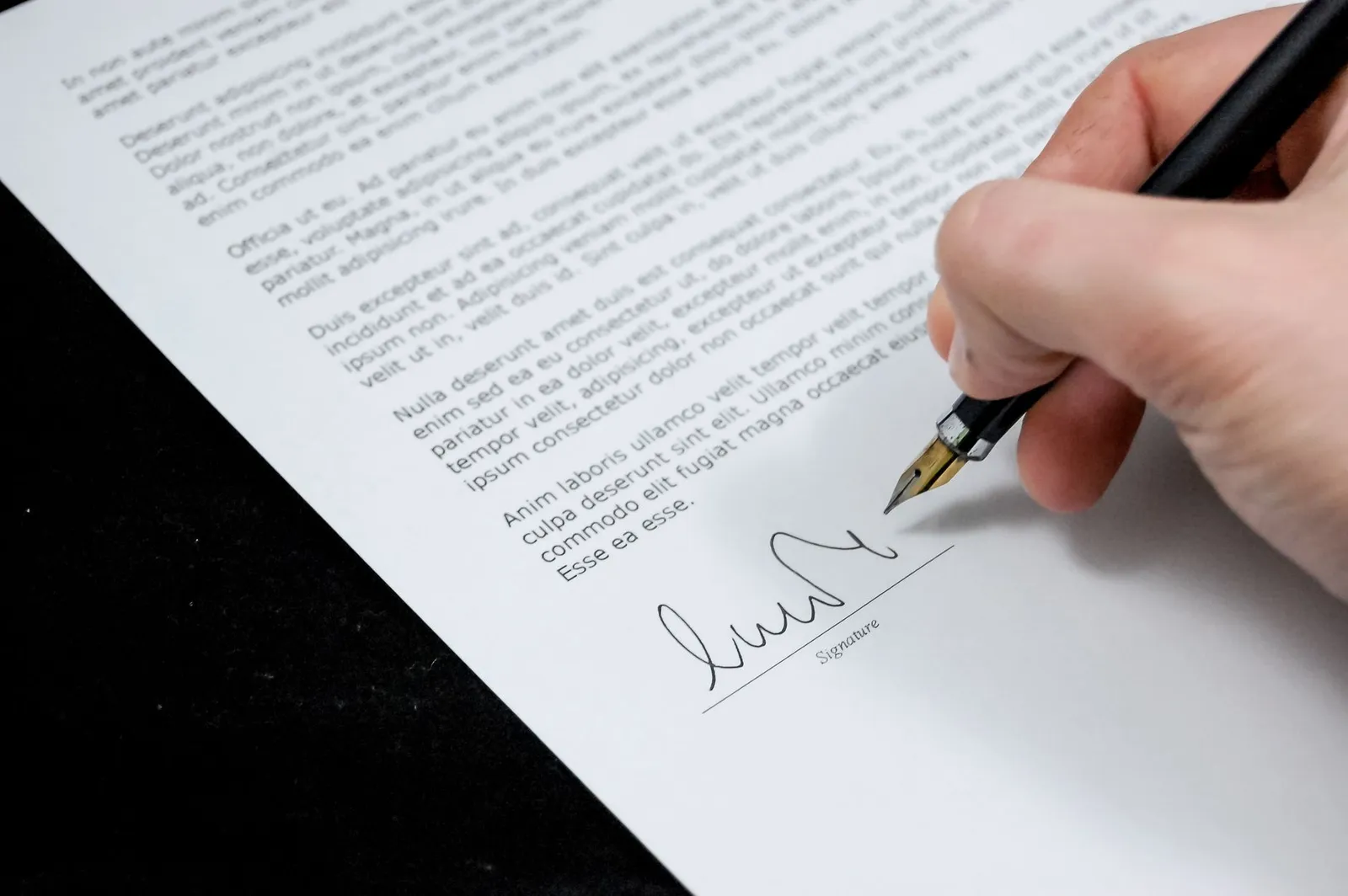
A personal guarantee, or PG, is a contractual clause attached to a credit application that makes the signer personally liable for the business's debt if the company can't pay. This isn't boilerplate you can skim past on page four of a disclosure. Sign it, and if the business closes with, say, a $15,000 unpaid balance, the issuer can come after you individually for that amount — not just the LLC or corporation that technically opened the account.
The Legal and Financial Exposure
The practical downside shows up in two places. First, a signed PG lets creditors go after personal assets — savings accounts, home equity, even wages through a court judgment — no matter how carefully the business itself is structured. Second, the application usually triggers a hard inquiry on your personal credit report. That means a business decision ends up on your individual credit history whether or not the company ever misses a payment.
Corporate Liability, By Contrast
True corporate liability works differently. When a card genuinely carries no personal guarantee, only the registered entity — the LLC, C-corporation, or S-corporation — is on the hook for unpaid balances. The owner's personal file stays untouched by the application, and in a worst-case default, personal assets are legally walled off from whatever the business owes. That separation is really the whole selling point of the no-PG category, and it's why funded founders and larger operators actively chase these products despite the steep eligibility bar.
Why Most Small-Business Cards Still Require One
Most mainstream small-business cards default to a personal guarantee because the issuer is underwriting the owner, not the entity.
Chase Ink Business Cash, Capital One Spark Cash Plus, and the Amex Blue Business Cash all require one, and so does the Sam's Club Business Mastercard, despite being marketed as an accessible card for small operators shopping at the warehouse chain.
Most small businesses simply don't have an independent credit file thick enough to underwrite on its own yet, so issuers fall back on the founder's personal score and payment history. That's exactly why cards skipping this step remain the exception, not the rule.
Corporate Cards That Skip the Personal Guarantee
As of 2026, four widely available corporate card products let a US-registered business apply without a personal guarantee: Brex, Ramp, Divvy by BILL, and the Stripe Corporate Card. Each swaps out the traditional personal credit check for a different underwriting signal — cash on hand, payment processing volume, or verified revenue — and each one targets a slightly different type of business.
| Card | Personal Guarantee | Card Type | Baseline Requirement |
|---|---|---|---|
| Brex | None | Charge card, daily or monthly settlement | Roughly $50K+ in a linked business bank account; historically geared toward funded startups |
| Ramp | None | Corporate charge card with AI-driven spend controls | US-registered business entity; minimum cash balance around $25K |
| Divvy (BILL) | None on qualifying accounts | Charge card, limit tied to cash and revenue | Verified cash balance or revenue history in place of a personal credit check |
| Stripe Corporate Card | None | Charge card | Established Stripe payment processing history; limit scales with Stripe account balance |
The structural pattern holds across all four: these are charge cards or cash-secured structures, not revolving credit lines. The full statement balance comes due every cycle. There's no option to carry a balance month to month the way a traditional card allows. That's actually the mechanism that lets issuers skip the personal guarantee in the first place — real-time visibility into a company's cash balance or transaction volume replaces reliance on the founder's personal credit history.
Divvy, now folded into BILL's spend-and-expense platform, deserves a closer look because it's less startup-centric than Brex.
Its no-PG option is available to a broader range of small and mid-sized businesses that can show a stable cash position, and it pairs the card with expense-management tools instead of positioning itself as a pure fintech perk for venture-backed companies.
Stripe's card sits at the other end of the spectrum: it's really only accessible to businesses already processing meaningful payment volume through Stripe, since that processing history is the underwriting signal filling in for a credit score.
What You Need to Qualify
Before you spend time on an application, confirm you can check every item below. Missing even one usually means an automatic denial, not a counteroffer.
- Business entity requirement: the applicant must be an LLC, C-corporation, or S-corporation; sole proprietors are almost universally ineligible because no legal separation exists between the owner and the business
- Cash balance or runway: Brex has historically required roughly $50,000 in a linked business checking account, and Ramp publicly references a minimum near $25,000 — both figures move over time, so confirm current terms directly with the issuer before applying
- Business credit file: an active Dun & Bradstreet DUNS number and a PAYDEX score above 80 meaningfully improve approval odds, and a parallel Experian Business profile adds further credibility
- Revenue or funding history: some issuers weight venture funding or monthly revenue heavily in underwriting; bootstrapped companies without institutional backing often need to show larger cash reserves to compensate
- EIN requirement: every application requires an EIN; if an SSN is collected, it's typically for identity verification only and isn't the basis for credit underwriting
Honest Trade-offs: No-PG Cards vs. Traditional Business Cards
Choosing between the two paths really comes down to one trade: protecting personal assets and personal credit versus keeping access to revolving credit and broader rewards.
| Factor | No-PG Corporate Card | Traditional Business Card (PG Required) |
|---|---|---|
| Personal liability | None — the entity alone is responsible for unpaid balances | Owner is personally liable if the business can't pay |
| Personal credit inquiry | Typically none at application | Hard pull on personal credit report is standard |
| Credit structure | Charge card — full balance due each cycle | Revolving line — balance can be carried, with interest |
| Rewards | Narrower: Brex offers category multipliers, Ramp focuses on flat cashback and vendor discounts | Broader: cards like Chase Ink offer travel points and tiered category bonuses |
| Eligibility bar | High cash minimums ($25K–$50K+) screen out early-stage businesses | Accessible with a 680-plus personal score and a reasonable business plan |
| Credit building | Activity reports to business credit bureaus, building a profile independent of the owner | Often reports to both personal and business bureaus simultaneously |
The Rewards Gap in Practice
Brex's multipliers land around 7x on rideshare and 4x on restaurants for qualifying accounts, structured as statement credits rather than a flexible points currency. Ramp leans further into flat cashback and negotiated vendor discounts — think savings on software subscriptions rather than travel perks.
Compare that to Chase Ink Business Cash, which earns 5% at office supply stores and on cell phone service, redeemable through Chase's broader points ecosystem, including transfers to airline and hotel partners. For a business that travels often or wants redemption flexibility, that gap can matter more than the personal guarantee itself.
When the No-PG Route Makes Sense
A funded startup sitting on $2 million in a business checking account, with no interest in carrying a balance and a strong preference for keeping personal and company credit completely separate, is the clearest fit for Brex or Ramp. The credit limit is a function of cash on hand, not the founder's personal score, so approval doesn't hinge on years of personal credit history.
When a Traditional Card Is the Better Fit
A business that needs to carry a balance through a slow season, or simply doesn't have $25,000 to $50,000 sitting idle in a checking account, is usually better served by a conventional card. Something like the Chase Ink Business Cash, available to owners with a personal score around 680 and up, offers real flexibility — even though it comes with a signed personal guarantee.
How to Build the Business Credit Profile That Gets You Approved
If you don't qualify today, the path to a no-PG card runs through building an independent business credit file over roughly six to twelve months.
- Incorporate the business: form an LLC or corporation in your state and get an EIN from the IRS online — the process is free and usually takes minutes; the SBA business guide is a solid starting point for choosing the right structure
- Register with Dun & Bradstreet: claim or create a free DUNS number, which anchors your business credit file and is required by most corporate card issuers before they'll even pull a profile
- Open net-30 vendor accounts: suppliers such as Uline, Quill, and Grainger extend trade credit and report payment history to business credit bureaus — most report monthly, so three to six months of on-time payments is usually enough to produce a usable PAYDEX score
- Build adequate cash reserves: open a dedicated business checking account and maintain a balance at or above your target issuer's stated minimum for several consecutive months before applying — applying before hitting that threshold is close to an automatic denial
None of this happens overnight, and honestly, that's fine. A business credit file built over a year of on-time vendor payments and steady cash reserves is worth a lot more than a rushed application that ends in a decline. Whichever path you pick, the real question comes down to this: how much of the business's risk are you willing to carry personally, and how much in rewards or flexibility are you willing to give up just to keep that risk contained to the entity alone?
Frequently asked questions
Can a sole proprietor get a business credit card with no personal guarantee?
Almost never. No-PG cards require a legally separate entity — an LLC, C-corp, or S-corp — because the issuer holds the company liable, not the owner. Sole proprietors have no such separation, which means lenders have no choice but to fall back on a personal guarantee. Restructuring as an LLC is typically the first step toward eligibility.
Do no-personal-guarantee business cards show up on my personal credit report?
Generally no — issuers like Brex and Ramp skip the personal credit pull at application and don't report routine activity to consumer credit bureaus. That means your personal file stays clean whether you're approved or carrying a high balance. The exception: a serious default can trigger collections that eventually surface on your personal report, depending on how the issuer handles recovery.
What happens if my business can't pay a no-PG corporate card balance?
Without a personal guarantee, your personal assets are legally shielded — the issuer can only pursue the registered business entity. In practice, expect the card to be suspended immediately, the balance sent to a collections process, and a negative mark filed with business credit bureaus like Dun & Bradstreet or Experian Business, which can make future business financing harder.
What's the minimum cash balance needed to qualify for Brex or Ramp?
Ramp publicly references a $25,000 minimum business bank balance as a starting point, while Brex has historically required around $50,000 in a linked business checking account. Both thresholds shift based on revenue, funding stage, and account history, so verify current requirements directly with each issuer before applying — the numbers on their sites can change without much notice.
Are there no-personal-guarantee credit cards that offer revolving credit — not just charge cards?
Revolving no-PG options are extremely rare. Brex, Ramp, Divvy, and Stripe Corporate Card are all structured as charge cards or cash-secured products requiring full payment each cycle — that structure is actually what allows issuers to skip the personal guarantee in the first place. If you need the flexibility to carry a balance month to month, a traditional business card with a personal guarantee is the more practical route.