

Best Credit Cards for Groceries in 2026: Up to 6% Back at Supermarkets
Groceries usually rank as the biggest household expense right after housing, according to CNN Underscored — which is exactly why the supermarket aisle is such a smart place to aim a rewards card. Get the right card, and $400 a month in food spending can turn into $200-plus a year in cash back.
Key takeaways
- Supermarket bonus rates hinge on Merchant Category Codes, not what's in your cart — Walmart, Target, and warehouse clubs almost never qualify.
- Grocery delivery through third-party apps can lose you the bonus rate; ordering directly through the store's own site usually preserves it.
- Costco and Sam's Club have their own MCC, so most high-earn grocery cards drop to 1% there — the Costco Anywhere Visa is the main exception.
- Pairing a 6%-back supermarket card with a flat-rate 2% card for big-box stores typically beats using a single card for everything.
- Caps and annual fees matter: a $95-fee card still wins if your qualifying supermarket spend is high enough, but the math is worth running.
But that only works if you know which stores actually qualify for the bonus rate. Below is a side-by-side look at the top earners for 2026, along with the fine print that catches most cardholders off guard.
How Grocery Rewards Categories Actually Work
Every merchant that takes credit cards gets stamped with a four-digit Merchant Category Code (MCC) by the card networks. Issuers use that code — not what's actually sitting in your cart — to decide which reward rate kicks in. A traditional supermarket usually falls under MCC 5411. Buy the same groceries somewhere coded differently, though, and that bonus rate just won't fire, no matter how much food you're hauling home.
Why Walmart, Target, and Warehouse Clubs Miss the Bonus
Walmart and Target almost always code as general merchandise or discount superstores (MCC 5310 or 5311), not supermarkets. So most grocery-focused cards only pay their standard 1% there, even if your cart is stacked with produce and dairy. Costco and Sam's Club land in a category all their own — warehouse clubs, MCC 5300 — which sits apart from supermarkets on nearly every issuer's rewards chart.
Grocery Delivery: Website Orders vs. Third-Party Apps
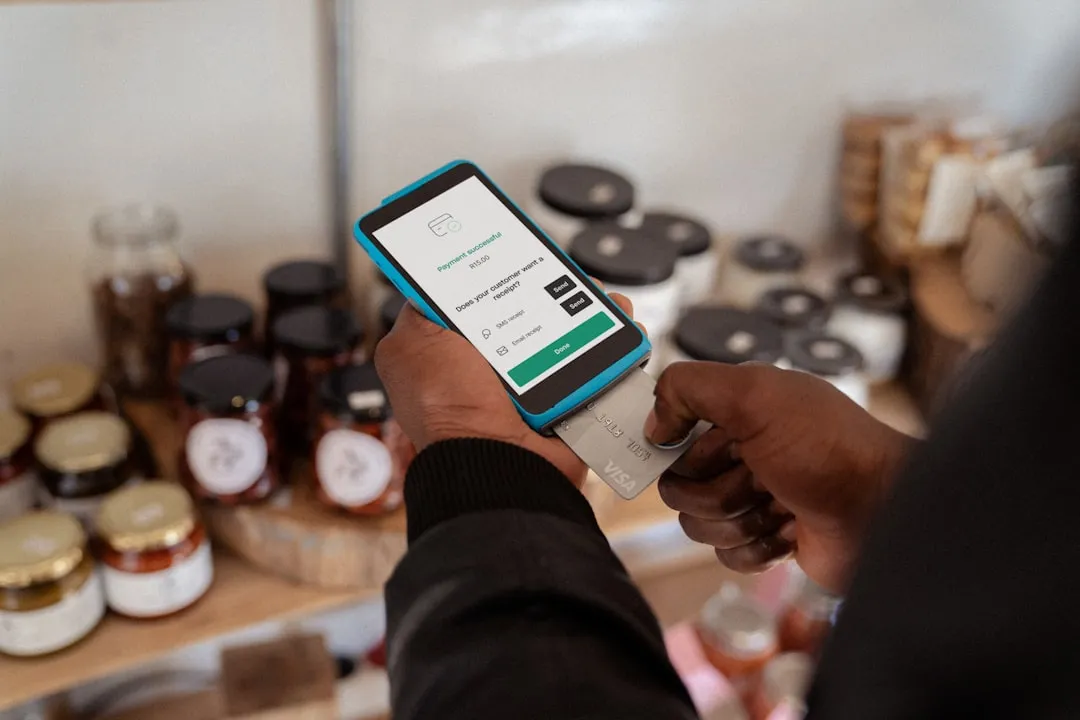
Order directly through a qualifying supermarket's own website or app, and you'll usually keep the MCC 5411 code, since the store itself processes the charge. Go through a third-party delivery service instead, and the transaction might get routed under a different code tied to the delivery platform rather than the store. Worth checking your issuer's category rules before assuming a delivery order earns the same as walking the aisles yourself.
The money at stake here is real. A household spending $400 a month on groceries, assuming a 6% rate applies everywhere it actually doesn't, could leave $150 to $200 in rewards on the table over a year — all from shopping at the wrong stores under the wrong assumptions.
Cards With the Highest Supermarket Rates
Comparisons from NerdWallet and The Points Guy keep pointing to the same four issuers for supermarket earning power heading into 2026. The rates, fees, and caps below reflect current issuer terms as of publication, and those can change — so double-check the details on the issuer's site before you apply.
| Card | Grocery Reward Rate | Annual Fee | Cap / Notes |
|---|---|---|---|
| Blue Cash Preferred® Card from American Express | 6% at U.S. supermarkets | $0 intro first year, then $95 | Up to $6,000/year in purchases, then 1%; paid as statement credit |
| American Express® Gold Card | 4x Membership Rewards at U.S. supermarkets | $325 | No annual cap; best value when points are redeemed for travel at 1¢–2¢+ per point |
| Citi Strata Premier® Card | 3x ThankYou® Points at grocery stores | $95 | No annual cap; strong for flexible-point redeemers who also spend on hotels and flights |
| Discover it® Cash Back | 5% in rotating quarterly categories (when groceries are included) | $0 | Up to $1,500/quarter after activation; grocery category availability is not guaranteed year-round |
Warehouse Clubs and Superstores: The Fine Print
Big-box spending plays by a different set of MCC rules than supermarket spending does, and that gap is probably the single biggest reason people overestimate what their card will actually pay out over a year.
- Costco and Sam's Club are coded as warehouse clubs (MCC 5300) — nearly every high-earn supermarket card drops to its base 1% rate there, not the headline grocery percentage.
- The Costco Anywhere Visa® by Citi is the notable exception, paying 2% on all Costco purchases, including in-warehouse and Costco.com, with no annual card fee beyond Costco membership.
- Walmart and Target code as general merchandise or discount superstores, so grocery bonus rates almost never apply there regardless of how much of the receipt is food.
- A legitimate workaround: buying a Walmart or Target gift card at a qualifying supermarket (MCC 5411) can capture the higher bonus rate, but confirm your issuer's terms first — some explicitly exclude gift card purchases from bonus categories.
- If a meaningful share of your grocery budget goes to Costco or Walmart, factor that into the math before choosing a card marketed purely on its supermarket rate.
Pairing a Grocery Card With a Flat-Rate Card
One card rarely covers all your household food spending. A big chunk of many grocery budgets goes to stores that never trigger a supermarket bonus in the first place. Splitting spending across two cards closes that gap, and it doesn't take much extra effort.
- Lead with your high-earn supermarket card: use it exclusively at qualifying U.S. supermarkets (MCC 5411) to capture 4% to 6% back on every eligible dollar.
- Switch cards for big-box and club spending: pull out a flat-rate 2% card, such as the Citi Double Cash® or Wells Fargo Active Cash®, for Costco, Walmart, Target, and restaurant charges where the grocery bonus doesn't apply.
- Run the numbers: at $300/month in qualifying supermarkets earning 6%, that's $18/month; add $150/month at Costco earning 2% flat, that's $3/month — a combined $252 a year.
- Subtract any annual fee: a $95-fee supermarket card brings net rewards to $157, still ahead of the $108 you'd earn putting the full $450/month on a single no-fee 2% flat-rate card.
This two-card approach pays off most when your grocery spending is spread across different types of stores. But if nearly all your food shopping happens at one qualifying supermarket, a single premium card usually keeps things simple without costing you much in lost rewards.
Which Card Wins by Monthly Grocery Budget
Matching the card to your realistic monthly spend is what determines whether an annual fee pays for itself or just quietly eats into your rewards. Use the breakdown below as a quick gut-check before applying for anything.

| Monthly Grocery Spend | Annual Spend | Best-Fit Card | Approximate Net Reward |
|---|---|---|---|
| Under $200/month | ~$2,400/year | No-fee option (Discover it® Cash Back during active 5% quarters, or a no-fee 3x card) | A $95 annual fee rarely pays for itself at this volume |
| $300–$500/month | ~$3,600–$6,000/year | Blue Cash Preferred® Card from American Express | $450/mo × 6% = $324; minus $95 fee = $229 net, versus $108 net on a 2% flat-rate card |
| Above $500/month | ~$6,000+/year | Blue Cash Preferred up to the cap, then Amex Gold's uncapped 4x for the rest | Cash value plateaus at the $6,000 cap; Amex Gold can pull ahead if points are redeemed for travel at 1.5¢–2¢ each |
At $450 a month, the math keeps favoring Blue Cash Preferred: $324 in cash back minus the $95 fee nets $229 a year — about $121 more than a plain 2% flat-rate card would give you on the same spending. Once you cross the $6,000 annual cap, though, the calculus shifts toward whatever redemption style you actually use, whether that's straight cash back or travel points worth more per point than their cash equivalent.
Frequently asked questions
What credit card gives the highest cash back on groceries?
The Blue Cash Preferred® Card from American Express earns 6% cash back at U.S. supermarkets — the highest flat supermarket rate widely available heading into 2026. That rate applies to the first $6,000 in annual purchases (about $500/month), then drops to 1%. On a $400/month grocery budget, that's roughly $288 back before factoring in the annual fee.
Does the grocery cash-back rate apply at Walmart or Costco?
No. Walmart and Target code as general merchandise or discount superstores (MCC 5310/5311), while Costco and Sam's Club fall under warehouse clubs (MCC 5300) — neither triggers a supermarket bonus on virtually any grocery card. One workaround: buying gift cards for those stores at a qualifying MCC 5411 supermarket may capture the higher rate, but check your issuer's terms first.
Is the American Express Gold Card worth it for groceries?
It depends on your full spending picture. The Amex Gold earns 4x Membership Rewards at U.S. supermarkets with no annual cap, but the $325 annual fee requires you to extract real value from the card's dining and travel credits. Cardholders who also spend heavily at restaurants and redeem points for travel typically come out ahead; pure grocery-only spenders may not.
Can I pair two grocery credit cards to maximize rewards?
Yes, and the math is compelling. Use a high-earn supermarket card (4%–6%) exclusively at qualifying MCC 5411 grocers, then switch to a flat-rate 2% card — like the Citi Double Cash® or Wells Fargo Active Cash® — for Costco, Walmart, and Target. At $300/month qualifying groceries plus $150/month at warehouse clubs, that two-card setup can generate $252 a year, beating a single flat-rate card by a meaningful margin even after a $95 annual fee.
What happens when I hit the annual spending cap on a grocery card?
The bonus rate disappears and you're left earning the card's base rate — typically 1% — on every additional supermarket dollar that year. On the Blue Cash Preferred, that cliff hits at $6,000 (roughly $500/month). Monitor your spending in the issuer's app, and once you're close to the cap, route supermarket purchases to a flat-rate 2% backup card so you don't leave money on the table.