

Best 0% APR Credit Cards in 2026: Interest-Free Purchases and Transfers
A 0% APR credit card can genuinely save you money, whether that's on a big purchase or a pile of existing debt. But that only holds true if you match the right offer to the right job. Purchase APR promotions and balance transfer APR promotions aren't interchangeable, and intro periods swing wildly from card to card. Get the pairing wrong and you'll either waste months of the promo or get blindsided by an interest bill you never saw coming.
Key takeaways
- Purchase and balance transfer promos are separate benefits on separate clocks — a card generous with one may offer little on the other.
- Balance transfer fees (typically 3%–5%) reduce your savings before you earn a single dollar in interest relief, so always run the math first.
- When the intro period ends, any remaining balance starts accruing interest immediately at the card's ongoing variable APR — no grace buffer.
- Store card 'deferred interest' promotions are fundamentally different from true 0% APR: one unpaid dollar at the deadline can trigger retroactive interest on the entire original balance.
- Build a fixed monthly payoff target on day one by dividing your balance by the number of intro months — don't wait until month 10 to do the math.
0% APR on Purchases vs. Balance Transfers: They Are Not the Same Thing
Purchase APR covers new spending you charge to the card after opening it. Balance transfer APR covers debt you move over from another card or loan. Both can show up as 0% on the same piece of plastic, but they're separate benefits running on separate clocks. A card can be generous with one and offer almost nothing on the other.

Same Label, Different Rules
The Citi® Diamond Preferred® Card makes this split obvious. It gives cardholders 0% for 21 months on balance transfers but only 12 months on purchases, according to WalletHub. Open this card to finance a new mattress while ignoring the transfer feature, and you're leaving nine months of interest-free runway on the table. Open it to consolidate credit card debt, though, and you get nearly two years to work the balance down to zero.
The Fee You Must Subtract First
Balance transfers almost never come free. Issuers typically charge 3% to 5% of the amount you move, taken off the top the moment the transfer posts. Move $8,000 at a 5% fee and you're paying $400 upfront before you've saved a single dollar in interest. That's why the math only works when the fee is smaller than the interest you'd otherwise rack up on your current card.
Before you start comparing intro lengths, rewards, or annual fees, answer one question honestly: do you need financing for something you're about to buy, or relief from debt you're already carrying? That one answer eliminates half the cards on the market and points you toward the right section below.
The Longest 0% Intro APR Offers Available Right Now
Four cards currently anchor the long-intro end of the market, and each is built for a slightly different situation. Bankrate tracks these offers monthly, because issuers adjust intro lengths more often than most shoppers realize. Worth confirming current terms before you apply.
| Card Name | Intro APR on Purchases | Intro APR on Balance Transfers | Balance Transfer Fee | Regular APR (Variable) | Best For |
|---|---|---|---|---|---|
| BankAmericard® credit card | One of the longest purchase windows currently offered | Also includes an extended 0% transfer window | 5% | 15.99%–25.99% | Shoppers who want maximum time and no rewards distraction |
| Citi® Diamond Preferred® Card | 12 months | 21 months | 3%–5% | Varies with the Prime Rate | Consolidating high-interest credit card debt |
| Wells Fargo Reflect® Card | 21 months from account opening | 21 months on qualifying transfers | Standard transfer fee applies | Variable, set at account opening | Anyone who wants the longest window on both purchases and transfers |
| Chase Freedom Unlimited® | 15 months | 15 months | Standard transfer fee applies | Variable, tied to market rates | Disciplined spenders who also want cash back |
Notice the trade-off pattern here. The longest single-purpose windows belong to the BankAmericard® credit card and the Wells Fargo Reflect® Card, while Chase trims the intro period on the Freedom Unlimited® in exchange for unlimited cash back that keeps accruing even after the promo ends. Neither approach is wrong. They just serve different priorities.
What Happens When the Intro Period Ends
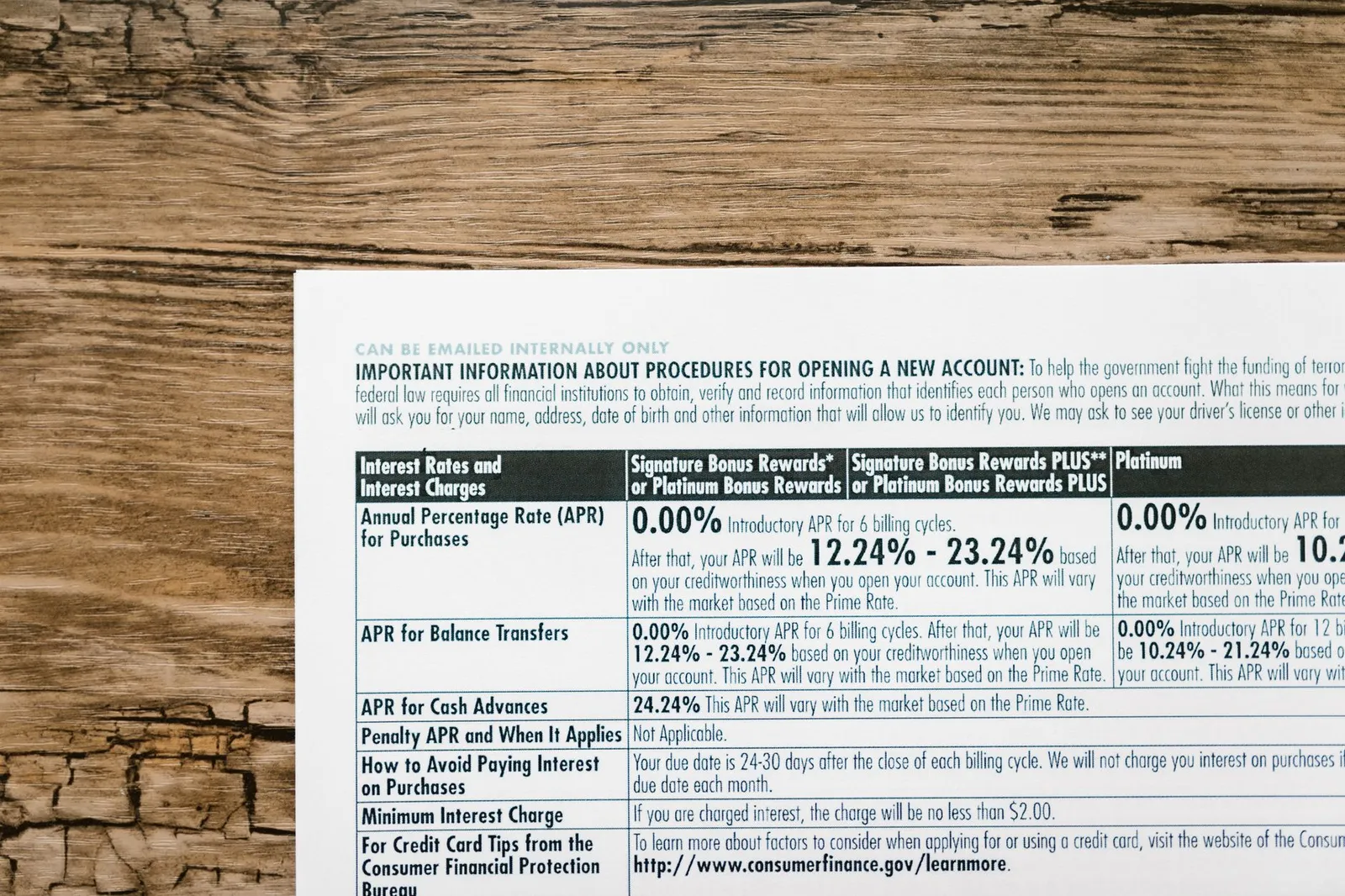
- Understand the automatic reset: whatever balance remains on the day the intro period expires starts accruing interest at the card's ongoing variable APR immediately. There's no grace buffer beyond your normal monthly statement cycle, so the switch happens the moment the calendar turns.
- Know that variable APRs move with the Prime Rate, not with the date you opened the account. The rate you actually face at expiration depends on broader market conditions at that time, so budget using the higher end of the card's disclosed APR range rather than assuming the lowest figure will apply.
- Build a payoff schedule on day one rather than waiting until month 10 to do the math. Divide your total balance, or your planned purchase amount, by the exact number of intro months to find the fixed monthly payment that zeroes it out before the deadline hits.
- If you run the numbers midway through and see you won't finish in time, look at transferring the remaining balance to a fresh 0% intro APR card before the current one expires. Factor the new transfer fee into that decision, and recognize this move works once or maybe twice before your credit profile or the available offers dry up.
Deferred Interest Traps: Why Store Cards Play by Different Rules
A retail card advertising '0% financing for 18 months' often isn't offering the same protection as a bank-issued 0% APR card, and that difference can cost you hundreds of dollars. This structure is called deferred interest, and it works against you in a way a standard intro APR never does.
How Deferred Interest Actually Works
With a true 0% APR card, interest only ever applies to whatever balance is left after the intro period ends, calculated from that point forward.
With a deferred interest promotion, if even one dollar remains unpaid when the promo closes, the issuer can charge interest retroactively on the entire original purchase amount, dating all the way back to day one.
Say you charge $2,000 on a store card carrying an 18-month deferred interest promo at 29.99% APR, and you pay it down responsibly to $200 by month 18. You can still end up owing interest calculated on the full original $2,000, not the small remaining balance. That single miscalculation can tack hundreds of dollars onto a bill you thought you'd nearly paid off.
Spotting the Real Deal
A genuine 0% APR card comes from a major bank on a Visa, Mastercard, American Express, or Discover network, and it charges interest only on what's left after the promo ends, never on the original purchase price.
The CARD Act of 2009 requires issuers to disclose deferred interest terms, but that disclosure is often buried in dense fine print rather than stated plainly on the offer page. The fastest way to protect yourself? Scan the terms for the exact phrase 'deferred interest.'
If you spot it, treat the offer as a countdown timer with a penalty for missing the buzzer, not as a forgiving 0% period.
Who Should (and Should Not) Use a 0% APR Card
- Good fit: someone financing a large, necessary purchase, such as a new refrigerator, an urgent home repair, or a planned medical expense, who has already mapped out a realistic monthly payment that clears the balance inside the intro window.
- Good fit: a disciplined borrower with good-to-excellent credit who's carrying high-interest revolving debt on another card; the balance transfer math frequently favors this person once the transfer fee is weighed against the interest they'd otherwise keep paying.
- Poor fit: a consumer whose spending habits created the original balance without an actual plan to close the underlying budget gap. A longer interest-free runway in this case usually just delays the same problem and lets the balance grow larger before interest resumes.
- Poor fit: applicants with a FICO score below roughly 670. The longest intro offers typically require good to excellent credit, and a denial still leaves a hard inquiry on the credit report with no interest-free benefit to show for it.
How to Pick the Right Card for Your Specific Goal
- Define your goal before you start browsing offers: are you financing a new purchase, or paying off existing debt? That one decision immediately narrows the field and stops you from optimizing a feature you don't actually need.
- If you're financing a purchase, prioritize the longest purchase-APR intro window available, and check whether the card also earns rewards during that period. The Chase Freedom Unlimited® and the Wells Fargo Active Cash® Card both let you rack up cash back while your 0% clock is still running, which a plain intro-APR card cannot match.
- If you're consolidating debt, run the full cost comparison before applying anywhere. Multiply the transfer amount by the fee percentage, then estimate what you'd pay in interest on your current card over that same number of months at its regular APR. If the transfer fee is smaller than the projected interest, the move saves money; if not, skip it.
- Check your credit score before submitting any application. Pulling your free report at AnnualCreditReport.com costs nothing, and knowing your score range keeps you from burning a hard inquiry on a card whose longest 0% offers you're unlikely to qualify for anyway.
Frequently asked questions
How long can a 0% APR intro period last on a credit card?
The longest offers currently run 21 months. Both the Citi® Diamond Preferred® Card and the Wells Fargo Reflect® Card hit that mark, though they split the benefit differently — the Citi card, for instance, gives 21 months on balance transfers but only 12 months on purchases. Most cards fall somewhere in the 12–18 month range, and issuers adjust these windows more often than shoppers expect.
Does a 0% APR card hurt your credit score?
Yes, briefly. Applying triggers a hard inquiry that can shave a few points off your score, and a new account lowers your average credit age. Over time, though, responsible use typically helps — keeping a large balance on a 0% card rather than spreading debt across high-utilization accounts can actually improve your utilization ratio once you start paying it down.
Is there a fee to transfer a balance to a 0% APR card?
Almost always, yes. Most issuers charge between 3% and 5% of the transferred amount, collected the moment the transfer posts. Move $8,000 at a 5% fee and you're paying $400 upfront before saving a dollar in interest. The transfer only makes financial sense when that fee is smaller than the interest you'd otherwise pay on your existing debt.
What is the difference between 0% APR and deferred interest?
With a true 0% APR card, interest only applies to any balance still outstanding after the intro period ends. Deferred interest — common on retail store cards — works against you: if even one dollar remains unpaid when the promo closes, the issuer can charge interest retroactively on the entire original purchase amount going all the way back to day one, which can cost hundreds of dollars.
What credit score do you need for the best 0% APR credit cards?
Most cards with intro periods of 18 months or longer require good to excellent credit, generally a FICO score of 670 or above. The longest-window cards — think 21-month offers — tend to be more selective, often preferring scores of 720 or higher. If your score is borderline, check for prequalification tools before submitting a formal application to avoid a hard inquiry.